The film, in writing.
Lunch still needs to arrive at noon, even when more people turn up. Extra cooks help until the oven, supplies or deliveries can’t keep pace. That kitchen gives me a way to explain why expanding an AI data centre means coordinating more than servers.
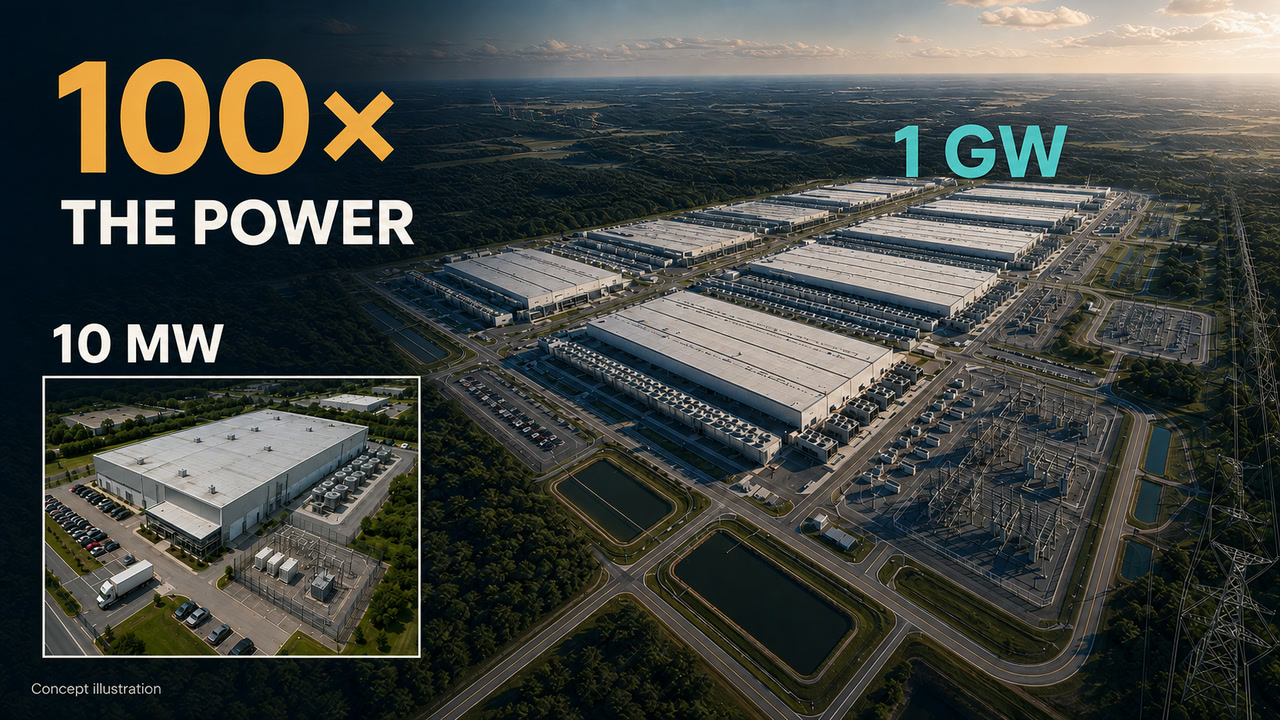
The film starts from TCS HyperVault’s September 2026 announcement of a Hyderabad campus planned for up to one gigawatt, built in phases. I compare it with facilities and campus projects in the US, China and Canada. The distinctions matter: a building’s power rating, a phase already operating and a campus’s planned maximum tell us different things.
Some equipment can be repeated as demand grows. Power connections, cooling, networks and suppliers still have to keep pace with it. If a handoff fails, usable capacity can be delayed even when individual components work. Building in phases gives teams a chance to match capacity to demand and learn along the way. I’d ask which constraint needs attention next, and who owns that handoff.
A question to take to work
When demand grows, what needs to keep pace, and who is responsible for it?
What to keep in mind. The Hyderabad figure describes a phased plan, not operating capacity. Power in megawatts or gigawatts doesn’t tell us how much useful computing a site delivers or how much floor space it needs. The kitchen helps explain coordination; it doesn’t convert meal counts into megawatts.